Plant Location
Foreground
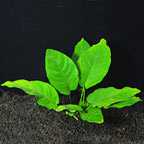
Plants in the foreground need to be low-growing so they don't block the view of rest of your aquarium. They can be individual plants or ground cover type plants. Rosettes such as the Dwarf Lilly, Dwarf Anubias, Micro-Sword Grass, and some of the Cryptocoryne's work real well. Stem plants like the Fountain Plant and the Japanese Rush are great individual plants for the foreground and can also be used as additional focal points.
Midground
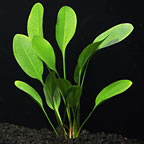
The mid-ground area of your aquarium is the primary focal area. Careful placement of plants in this area is important for a balanced design. It is also important to include open swimming space for your fish in this area. Consider low-growing and moderate height plants. Those that bush out can be perfect, as they will have plenty of room to grow and can become the main attraction. Stem plants work great for this area, as many of them are moderate in height as well as have some bushyness to them. There are also fern plants and rosette plants that can work well.
Background
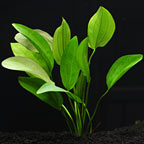
This is for the backdrop of your tank. Aquarium plants that do best in this area are those that grow tall. Rosette plants such as the sword plants, Vallisneria, and Water Onions work well here. Some of the ferns like the Java Fern, and some of the stem plants like Anacharis, Hornwort, and Cabomba can also be used. You need to be careful that the plants you choose for height don't also bush out too much. unless you want plants that will fill in both the background area as well as the middle area.
Live Aquarium Plants
Pros
There are few things more satisfying in aquarium care than enjoying a well-planted tank you created yourself. Done right, live plants are beautiful additions to your tank. Just like fish they grow larger, sometimes expand to take up new territory, exchange gasses, consume food, create waste and may even procreate.
The point is live plants are exactly that: Living things in your tank. As such they will have a special relationship with the fish that isn’t possible with artificial plants.
Where the fish in your tank take oxygen from the water and expel carbon dioxide, real plants do the opposite, taking up the carbon dioxide and exchanging it for oxygen. Most properly filtered tanks do not have a problem with maintaining enough oxygen in the water, but it is helpful to have poisonous carbon dioxide reduced, especially in heavily stocked tanks.
Your plants will have a similar symbiotic relationship when it comes to waste. The very things that can cause an aquarium to become dangerous for the fish, most significantly sources of nitrogen such as ammonia, nitrates and nitrites from their waste, will be soaked up by plants as food. This does not take the place of responsible tank management, but it does make your life a little easier.
Live plants are one way to help reduce algae in the tank. Aquatic plants compete with algae for the same food sources, and they usually win the battle. You may still need to do a little scraping from time to time, but a planted tank can really keep algae under control.
Cons
As you can see, there are some great reasons to utilize live aquarium plants in your tank. In fact, it is really the best way to create an environment that is most like what your fish would experience in the wild world.
But there are some negatives as well. For one thing, if you plan to have a planted aquarium, you are going to have to spend some time learning about plants as well as fish. How big will they grow? Will they spread? What kind of water do they thrive in?
You’ll need to spend some time pruning your plants now and then. Otherwise, they can and will grow out of control. Some widely available aquarium plants, such as the Amazon Sword, really need to be in tanks 55-gallons or larger to reach their full potential.
Cleaning your tank is not nearly so easy. On the plus side it is not quite as necessary, but you’ll still need to perform water changes and vacuum up waste from the substrate. What you cannot do is thoroughly vacuum the gravel, as digging into the substrate will not only disturb your live plants but remove some of their food.
Nor can you rearrange your decorations so easily, since you’ve got roots to contend with. Once you’ve planted your tank it is best not to mess with it.
Some fish are tough on live plants. For example, plecos can destroy them in an attempt to remove any algae, and fish like silver dollars will nibble them to the nub. You have to be aware of which fish species you are stocking if you expect your plants to stay intact.